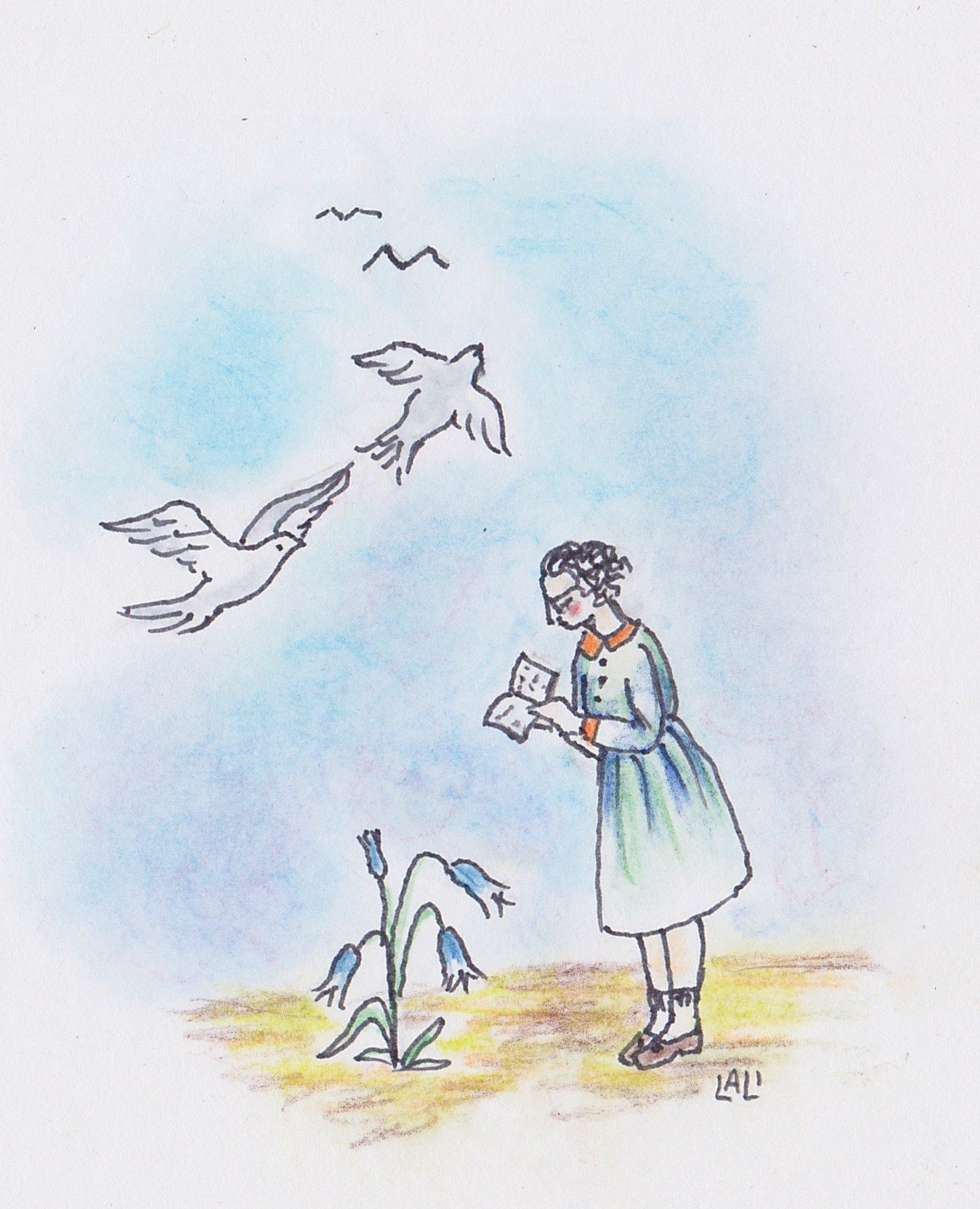
Showing posts with label Catholic school. Show all posts

Wednesday, July 14, 2021

Pep Rally

 Birmingham, Alabama. A Friday afternoon in September. It is the end of my first week in my new American school, and I am at my locker, about to go home. The hallways are deserted, but it’s probably because everybody has already left for the weekend. A girl comes by. “You can’t go home now!” she says. “There’s a pep rally in the gym! Hurry up, you’ll be late!”

It’s been a week full of weirdness. The weirdness of something called “homeroom.” The weirdness of the Pledge of Allegiance (from which I, a citizen of Spain, am excused). The weirdness of diagramming sentences. And the unspeakable weirdness of boys in the class. 

And now this pep rally. What is “pep”? What is “rally”? 

I find my way to the gym, push open the door, and am blown back by a wall of sound so loud it nearly knocks me over. Never in my thirteen years, and certainly not in my previous schools (run by nuns, for future ladies) have I heard such a din. The entire school is here, even the priests, nuns, and lay teachers, all of them yelling at the top of their lungs. There are repeated “rah’s” and “go’s” and “yay’s,” but are these expressions of anger, alarm, or what? Why are they raising their fists in the air? Is this a political demonstration? 

The noise is so loud that I give up trying to understand and stand there dumbly, sure that everybody is wondering what is wrong with me. In the center of the commotion stands a line of girls dressed in flared knee-length green skirts and thick white sweaters with big green letters on them. Grinning maniacally and yelling “rah,” and “go” and “yay,” they shake what look like mop heads made of green and white strips of paper. Periodically they give an extra loud yell and jump in unison, pumping their arms, arching their backs, and making their skirts float up. 

Behind the girls is an even more bizarre sight: a group of what I assume are boys with helmets covering their heads and part of their faces, grotesquely swollen shoulders, and capri pants. They are dressed in white, with big green numbers on their shirts.

 Then Father H., the principal, steps to the microphone and the yelling subsides. He makes the sign of the cross and the girls drop their mops to the floor as their skirts settle around their calves. “Hail Mary, full of grace…” Father H. intones. I recognize the prayer, so I say to myself “Dios te salve, MarĂ­a…” But what are we praying for? 

When it’s over I walk home in the amazing Alabama heat, glad to be away from the noise and the alien excitement, but feeling strange and alone. I’m worried that I never figured out what the pep rally was about, and that I will perhaps be asked about it on a test. For the moment, though, my brain unclenches, and I bask in the temporary relief of not hearing, not speaking, not trying to understand English. 

At home, I kiss my mother, go into my room, and turn on the radio—very softly because my father is in the living room practicing. Buddy Holly is singing that it’s raining in his heart. I can understand that. It means that he is sad because the girl he loves has gone away. (Will an American boy ever be sad because of me?) 

Then comes the mournful refrain: “Oh misery, misery, what’s gonna become of me?” And my brain, ceaselessly working to make sense of the strange world in which I find myself, concludes that Buddy must be saying “Oh, Missouri, Missouri”-- which is a state somewhere in the middle of this big, confusing country where that cruel girl has gone and left him all alone, like me.

Wednesday, March 3, 2021

Uniforms

To my first school, run by an order of German nuns in Barcelona, I wore a black- and-white houndstooth jumper and a long-sleeved white cotton blouse. In the classroom we wore a white coverall to catch the spatters from our dip pens as we practiced handwriting. And to protect our modesty while we did calisthenics in the garden, we wore bloomers under our skirts. 

My school in Quito, run by the Sisters of Mercy, required two uniforms, one for regular days—blue-and-white check with short sleeves and gathered skirt--and one for special occasions (el uniforme de fiestas). Since my parents’ original plan was to stay in Ecuador for only one year, my mother explained to the principal that it didn’t make sense to have two uniforms made. Would just the regular one suffice? The principal said it would. 

The problem was that the principal neglected to issue a school-wide edict declaring me exempt from the uniforme de fiestas. That fall, school had not been long in session before a special occasion arose in all its awesome grandeur: the feast of Our Lady of Mercy, patroness of the order. The day dawned light and clear over the Andes, as most days did in those pre-pollution times. The volcanoes ringing the city twinkled and sparkled under their eternal snows. In the school courtyard, my fellow students were assembled, and what had been a sea of light blue was now a sea of navy: el uniforme de fiestas. 

Even to my ten-year-old eyes the outfit looked weirdly old-fashioned: a scoop-necked wool dress with a white cotton “dickey,” it was belted at the waist and had wide sleeves gathered in folds at the wrist. The skirt, deeply pleated, fell to mid-calf. An absurd beret, also navy blue, crowned the effect. This being the 1950s, my classmates wore starched crinolines under the pleated skirt, which made it swing like a bell with every step, and patent leather Mary Janes. 

I entered the courtyard in my everyday uniform and the scuffed lace-up ankle boots designed to correct my supposedly flat feet. “Why aren’t you wearing your uniforme de fiestas?” whispered one of the girls in my class. 

“It’s because…My mother said…,” I mumbled. 

“La Mercedes won’t care what your mother said. She will be furious,” the girl warned me. 

La Mercedes, the vice-principal, was notorious for her temper. She soon spotted me as we lined up to enter the chapel, and wanted to know why I was disgracing the school on this, the most sacred of fiestas. I again stammered about my mother and the principal, and she frowned, shrugged, and sent me to the back of the line. 

That first year, I endured several more feast days in the wrong uniform, believing that in the summer I would go back to Barcelona where my non-controversial uniform and the German nuns were waiting for me. But several months after our arrival in Quito, the Ecuadorean government had mysteriously run out of money to pay my father’s string quartet their contracted salaries, and between endless promises that the money would come soon, and endless negotiations to get at least part of what was owed to us, we stayed in Quito almost four years. 

I was ten, then eleven, twelve, thirteen. Every fall the drama of the uniform was reenacted. Every time I showed up in ordinary blue when the school was in festival navy, nuns, lay teachers and students were outraged. “But why are you wearing the wrong uniform?” they would ask, as if it were my first offence. And every time I was at a loss for words. I understood that my mother, who on one occasion had had to borrow my allowance to buy groceries when the Government neglected to pay my father’s salary, could not afford to hire a seamstress to make me one of those awful navy outfits. But I also knew that, in that school, few things mattered as much as showing up in the right clothes for the right occasion. When nuns frowned and shook their heads and sent me to the back of the line, when my classmates asked why, why, why, I felt that I, and I alone, was responsible. 

Things got much better when I entered a Catholic high school in Birmingham, Alabama. Here, in the land of the free, there were no uniforms, and once I got my mother to understand that it was unacceptable to wear the same outfit to school  two days in a row (“But why? If it’s not really dirty…”), the clothing dramas temporarily abated. 

But in tenth grade, the school decided to institute uniforms. Perhaps some prophetic soul had seen miniskirts on the horizon and decided to take preemptive action. Whatever the reason, our mothers were instructed to go to Pizitz, Birmingham’s premier department store, to buy the uniform, which consisted of a plaid, pleated skirt and a short-sleeved white cotton blouse. My mother was fine with the skirt, but she saw no reason to buy the regulation white blouse, because she had a perfectly good white blouse hanging in her closet that she was sure would fit me. Never mind that her blouse was nylon rather than cotton, and had pearl rather than plain flat buttons. 

I warned her that it would never do. I argued and pleaded, but she was unmoved. I don’t believe that lack of money was my mother’s reason for her refusal to buy the uniform blouse--the Birmingham Symphony was a lot better about paying its musicians than the Ecuadorean government had been. Maybe she thought that two white blouses in a single household would be sheer American extravagance. Whatever the reason, she sent me to school in the nylon blouse. 

It did not take long for what I had foreseen to come about. I was summoned to the office. There I was interrogated by the principal’s secretary—mercifully not by the Monsignor himself, who perhaps thought it improper to concern himself with female attire—about my incorrect blouse. And suddenly, as I stood looking at my feet while she glared down at me, my brain was flooded with the clear understanding that this was not my problem. 

It was my mother’s problem, and it was the school’s problem, but it had nothing to do with me. It was not my job to reconcile two opposing sets of adult requirements. I was not morally responsible for their contradictory ideas of what was right. Let them fight it out among themselves, I said to myself, feeling a mixture of relief tinged with righteous fury. 

And so I looked the secretary in the eye and said, in a voice that trembled only slightly, “My mother has decided that this is the blouse she wants me to wear. Perhaps she cannot afford to buy another one. You could always call and ask her….” The secretary nodded and sent me back to class, and I never heard another word about uniforms again.

Fourth grade, in Barcelona, in the garden of the German school. I'm in the last row, next to Mater Leonarda


Friday, October 2, 2020

My Brain, My Gut, and Sister Mary Ruth

My brain, my gut, and Sister Mary Ruth--my high school English teacher--reacted to the news of Trump's Covid infection:

Gut: Gasps, adrenaline surge, animal excitement. 

Brain: This could be the equivalent of the Clinton emails! 

Gut: But what if Trump gets really sick/dies and the Proud Boys decide that it’s the Democrats’ fault?! (Fight/flight response sets in). 

Brain: Serves Trump right that he got sick. 

Sister Mary Ruth: Do unto others as you would have them do unto you. 

Brain: This could be the road to the first woman president!

Gut: Torrents of adrenaline flood system. Heart rate up. Feeling as if could—no, must—run a mile. Not an unpleasant sensation. 

Sister Mary Ruth, warningly: Ahem! 

Brain: Whiff of shame followed by twinge of conscience. 

Gut: Pulse rate down. Desire to run mile vanishes. 

Brain: But he KNEW that Hope Hicks had the virus and he STILL attended the fund raiser. He deserves what’s coming to him! 

Sister Mary Ruth, wags finger: That’s enough, now. 

Gut: Slight feelings of fatigue, or maybe indigestion. Also strange wired sensation, despite no additional coffee. 

Brain: Would be wise to close laptop. Maybe take nap? 

Gut: Must check updates. Trump cancels call with governors! Pence says Trump “just fine”! Should sic Sister Mary Ruth on VP, for telling fibs. 

Mind: Speaking of which, what if whole thing is another one of Trump's lies? 

Gut: Heart rate up again. Throat constricted. Nap? As if. 

Sister Mary Ruth , quoting Saint Teresa: “Let nothing disturb you, let nothing frighten you…all things are passing…God alone is sufficient.” 


Wednesday, October 16, 2019

Mantillas


 In Spain, when I was growing up in the 1950s, women wore mantillas to church. These were gorgeous embroidered affairs, white for unmarried girls and black for married women. Anchored by a hat pin, the mantilla was shaped like a rounded triangle, with the tip grazing the forehead and the two sides hanging down over the collar bones. Before the age of reason, which was held by the church to be seven, instead of mantillas little girls wore small round doilies on top of their head.

Some blame Saint Paul (“any woman who prays…with her head unveiled disgraces her head”), while others blame the early fathers of the church for making women wear veils in church. It is easy in retrospect to rage against Saint Paul and his cronies, who regarded head coverings as a mark of submission. At the time, however, we thought of the mantilla simply as a gender-related sign of respect: men had to uncover their heads, and we had to cover ours. Besides, with its scalloped edges framing the face, and the embroidered flowers and leaves both concealing and revealing the hair beneath, the mantilla made almost any woman look mysterious and alluring.

Nevertheless, we took the head-covering issue seriously. If a woman on her way back from the bakery wanted to stop for a quick visit to the Blessed Sacrament but had left her mantilla at home, she could throw a scarf or even a sweater over her head. Otherwise, she had to skip the visit altogether (God, we were told, understood these things, and would look kindly upon her intention).

Another ostensible reason for the mantilla was to prevent the men of the congregation from being distracted by the lust-inducing sight of female hair. I found this odd, but then you never knew about men. It was their fault after all that, in addition to the mantilla, women had to wear stockings in church, and sleeves long enough to cover their elbows. Still, even granted their penchant for getting aroused by seemingly harmless objects, I figured that if I had been a man I would have found the elaborate, semi-transparent mantilla way more intriguing than a pair of braids or a head of permed curls.

When I arrived at my Catholic high school in Alabama, I saw that girls, though well past the age of reason, wore not mantillas but “chapel veils,” exactly like the little doily that I had cast aside in favor of the more grownup style after my First Communion. And it wasn’t just high school girls who wore these, but also the adult women who filled the pews with their husbands and kids on Sundays. Some ladies wore padded Alice bands with little stiff, dotted veils pulled down coyly over their noses. Others, having dashed into church on the spur of the moment, simply covered their head with a Kleenex, and secured it with a bobby pin.

I interpreted this nonchalant attitude towards head coverings as a sign of American progressivism, which I was all for. But I continued to wear my no-nonsense Spanish mantilla because I thought it more flattering than the doilies. And if it momentarily distracted from his prayers some hapless boy my age, well, so much the better.

As the fifties gave way to the sixties, those tiny chapel veils, perched atop the teased and sprayed, helmet-like hairdos of the time, looked more absurd than ever. By the end of the decade, what with the surging feminist movement and the liberalization of the church after Vatican II, chapel veils and emergency Kleenexes went the way of stockings and garter belts. But the disappearance of head coverings signaled a deeper exodus. Like many of my generation, I put away my missal and my mantilla, and left the church forever. Or so I thought.


Wednesday, July 10, 2019

The Lipstick Wars


In the late 1950s, in my Catholic school in Birmingham, Alabama, girls wore their hair short, their skirts long and tight, and their lips coated with dark red lipstick.

I was o.k. on the hair and skirt fronts, and I even had a little orange scarf that tied around my neck, like everybody else. But none of this meant anything if my lips were bare. Lipstick was the magic wand that would camouflage my all-too-obvious foreigness, catapult me into American teenagerhood, and give me a chance of becoming at least slightly popular.

“I’m the only one in the entire school who doesn’t wear lipstick, besides the boys,” I complained to my mother.

“What about the nuns? Do they wear lipstick too?” she said, trying for irony.

 “Is that what you want me to become, a nun?” I answered. “Because that’s what will happen, if you force me to be different from everybody.”

“That’s enough!”my mother said.

I stomped off to my bedroom and sat biting my nails, dreaming of the boys I’d date and the dances I’d dance if only I were allowed to wear lipstick.

I endured ninth grade without lipstick or dates. Then, on my fifteenth birthday, a savior appeared in the form of Miss Harrington. Tall, thin, gray-haired and bespectacled, she was the very image of the spinster school teacher. She even lived with her mother. Miss Harrington taught Spanish at a public school, and she adored my parents, who were the only native Spanish speakers she had ever known.

Miss Harrington knew teenagers, and she understood the drive for affiliation that at that age rivals the sexual urge in intensity. So on October 3rd, 1959 Miss Harrington showed up at our house, made a little speech in front of my parents about what a grown-up young lady I was becoming, and presented me with a tube of Tangee lipstick.

It was a deep red bordering on purple, a color that would make even a fifteen-year-old face look middle-aged. But hey, it was a lipstick, and I could always tame it by blotting. I thanked Miss Harrington, barely restraining myself from kissing her feet in gratitude, and, with a triumphant glance at my mother, ran to the bathroom to try it on.

When Miss Harrington left, my mother pointed at my purplish mouth and said, “Take it off.”

“But Miss Harrington gave it to me. She’s a teacher! She knows Americans, and she doesn’t think I should be different from everybody.”

“And why shouldn’t you be different from everybody? We are not Americans. We are Spaniards, and in Spain little girls don’t wear lipstick.”

Why, you ask, didn’t I simply pretend to throw away the purple lipstick, hide it in my book bag, and put it on the minute I got to school? Because I was a good girl, that’s why, and I believed that obedience to my parents was second only to obedience to God.

But nothing said that I had to obey gladly, and as I fumed and ground my teeth, I had an idea. My mother’s sister was a teacher in the German nuns’ school I’d attended in Barcelona. She would know what Spanish teenagers were wearing, and, as my aunt, she would have my moral welfare at heart. My mother would, I reasoned, have to abide by her verdict.

So I wrote my aunt a letter begging her to intercede on the lipstick question, and sent it off by airmail. It took a week to get there, and her response another week to arrive, but when it did it contained these magic words: “a bit of pink on the lips would not be unbecoming…”

My mother was sautĂ©ing garlic for a sofregit when I ran into the kitchen waving the letter in the air. “A bit of pink’s o.k., she says! She says the girls in her school are wearing it! So now I can too!” But my mother tightened her lips, shook her head, and went back to stirring her sauce.

I was in my forties before I became aware of the deep rivalry that existed between my mother and the elder of her two younger sisters, and to realize that my aunt was the last person on the planet whose advice my mother would have taken on matters concerning me.

That summer, we went to Spain. My mother’s sisters, seeing me shapeless, pimply, and awkward, took me in hand. One bought me a bottle of Depurativo Richilet, a potion designed to purify the blood and get rid of acne. The other sewed me a sleeveless dress, full-skirted and cinched at the waist,that made me feel almost beautiful.

One night, as I was leaving for a party wearing the new dress, my aunts beckoned me into their bedroom and put a tiny smear of pink on my lips. I could barely see it, but I knew it was there by its weird, sticky feel, and I felt glamorous as well as guilty. I was almost out the door when my mother saw me, turned me around, and pointed to the bathroom.

She finally gave in on the lipstick issue when I turned sixteen at the start of eleventh grade. She was forty-two years old and nine months pregnant with her second child, and I suspect that she was too tired to keep up the fight. But my lipstick adventures were not over.

My religion teacher that year was an older Irish priest, Father MacCauley, who taught a cerebral approach based on the theology of Thomas Aquinas. This made us feel grown-up and intellectual, and we would argue in the cafeteria about which was the most convincing of the five proofs of the existence of God, and whether birth control really was a sin against human nature.

In one of his more bizarre lectures, Father Mac announced that, whereas it was man’s essence to be rational, women were by nature incapable of rational action. (How he got away with such pronouncements when the majority of his colleagues were Benedictine nuns I have never understood.) The boys in the class hooted with delight when they heard this, but at the end of the hour we girls got together and formed a compact: we would come to school the next day without wearing lipstick! That would show them!

I don’t remember what effect our bare lips had on Father Mac’s theories, but when we walked into English class, Sister Mary Rose took one look at us and exclaimed “Is something wrong? Y’all look so pale!” A few minutes later, I was called to the office. It was my father on the phone, telling me that the baby had arrived, and it was a girl.

In retrospect, I don’t hold it against my mother for taking a stand on the lipstick question. Who among us parents hasn’t on occasion put our foot down unnecessarily?

What I do object to is her holding me hostage to her own issues as an immigrant. It was very well for her, at forty, to emphasize her Spanish identity, which, among other things, made her an exceedingly entertaining dinner guest. At fourteen and fifteen, however, my identity was as fluid as a bowl of unset Jello.

Yes, I was proud of being Spanish, and I enjoyed the attention that being the only foreign student in the school occasionally got me. But I also intuited, in a nebulous way, that clinging to my foreignness would never get me invitations to sleepovers, or that holy grail of adolescence, a date to the prom. The exotic—unless it’s carried by someone far bolder and more self-assured than I was—doesn’t hold much fascination for teenagers, who generally prefer conformity.

With one foot on either side of the Atlantic, trying to interpret America to my parents while striving to please them in all things, I didn’t have an easy time of it. But I don’t envy my mother her task, either, and I’m certainly glad that I didn’t have to rear my adolescent daughters in a foreign culture. Which is why I can confer on my now-deceased mother the absolution that compassionate adults sooner or later bestow on their parents: “She did the best she could.”


Wednesday, May 22, 2019

Of Birds And Lilies

"Look at the birds of the air," Father Molloy intoned in his Irish brogue. "They neither sow nor reap nor gather into barns, yet the Lord God feeds them." Then he then went on about lilies and King Solomon, and when he had finished reciting he twinkled his blue eyes and said "Class, I want you to memorize this passage by tomorrow." The blood froze in my veins.

At home that evening I got out the New Testament and my paperback Spanish-English dictionary and went to work. I had no idea what the passage was about. I didn't know the meaning of sow, reap, gather, or barns. Then came the part about the lilies, which neither toil nor spin, whatever that was, but even Solomon was not arrayed like one of them. Arrayed--was it a good or a bad thing not to be arrayed like a lily?

And then a few lines further down Jesus said, "Therefore, do not worry..." (Matthew 6:26-34)

How could I not worry, when I had to memorize that long passage by tomorrow and I didn't know most of the words in it? I looked up sow, and reap, and gather. But by the time I got to barns I was confused. I had seen plenty of sowing and reaping in my grandparents' farm in Catalonia, but as far as I knew, the birds of the air were a menace around harvest time. They did not wait for the Lord God to feed them, but helped themselves boldly to the grain.

I ground my teeth and soldiered on, looking up word after word, but when I put them all together, the passage still didn't make sense. And here it was, almost bedtime, and I hadn't even begun to memorize.

"Therefore, do not worry..."

At fourteen, newly arrived in the U.S. and possessed only of the few crumbs of English I'd acquired from a German teacher during my three years in Quito, I worried all the time. I was the first-ever foreign student in a Catholic high school in Birmingham, Alabama, long before the days when English as a second language became an academic subject. I suspect that nobody knew what to do with me.

For my part, my all-consuming goal was to blend in so I could catch my breath and figure out, without letting anyone notice my ignorance, things I'd never encountered before, like homerooms and assemblies and rallies and football games, and to acquire enough English to survive.

My efforts at camouflage must have worked, because from day one my teachers seemed to assume that I was no different from my classmates. I'm sure that if I'd asked for help it would have been given gladly, but I never asked. I believed, given the stern regimes of my schools in Barcelona and later in Quito, that any sign of weakness or ignorance would be pounced upon by the school authorities and I would be cast into the outer darkness, to spend the rest of my days cleaning bathrooms for a living.

If I had only known how comparatively lenient and indulgent American educators were, I would have relaxed, but I didn't know, so I anxiously continued to mask my deficiencies. Arriving home in the afternoon, after a day of straining with every fiber to understand what was going on in class, I would retire to bed with a headache. Later I would get up and, dictionary in hand, try to do my homework.

But on the night of my encounter with the birds and the lilies, I finally realized that the dictionary was in fact hampering my efforts to understand. It was slowing me down, interrupting the flow of ideas so that I was missing the gist of the passage. Besides, there were just too many words I didn't know. It was impossible to look them all up, let alone remember them. I would simply have to figure out the meanings from the context.

With a sigh, I put the dictionary away and never opened it again. Somehow I winged it, lexicon-less, through the rest of school. At college graduation, my husband-to-be presented me with a hardcover Merriam-Webster Collegiate, but by then I hardly needed it.

It's been a late spring in Vermont, and the birds of the air and the lilies of the field are busy making up for lost time. The words in the Matthew passage are no longer a mystery to me. But, having learned to fret early on, it's those other words of Jesus that I still struggle with, "Therefore, do not worry...."


Monday, October 16, 2017

Always on the Moon

I am folding laundry when a quote by William Morris comes wafting out of my subconscious, "The true secret of happiness lies in taking a genuine interest in all the details of daily life." Morris was ahead of his time. These days everybody, from mental health  professionals to Buddhist monks, tells you that staying in the present is the key to health and happiness, peace and sanity. Unfortunately, I find staying in the present almost impossible to do.

Even as a child--and children are supposed to have a special talent for being "in the now"--I couldn't do it. "Es lenta," (she's slow) the nuns at my school used to complain to my mother. But that was because it took me a while to come back from the edge of the universe to whatever I was supposed to be doing. 

One example: I am marching single file with my class after recess when suddenly I perceive a strange silence around me. I return to earth to find my classmates gone and the yard deserted except for a single nun. Her hands hidden inside the sleeves of her long white habit, she is watching me and shaking her head: "Benejam--siempre en la luna" (always on the moon).

More than half a century has passed since that day, however, during which I have read a lot of books by Buddhist monks and psychiatrists and logged quite a few hours on my meditation cushion, so I should be able to be present and genuinely interested in folding the laundry, right here, right now. 

I pick up one of my husband's undershirts. Feel the cotton, I tell myself. Feel its softness. Notice the Fruit of the Loom tag, and how it has curled. Look at the color of the shirt--it is slightly yellow. It is not terribly yellow, but it would be less yellow if I didn't do my laundry in cold water. But it's the least I can do, in this era when the environment is going to hell in a hand basket, to save a bit of energy. There really should be a law against washing clothes in hot water...And I'm off to the moon again, or rather to the halls of Congress, lobbying for environmental legislation.

When I land back in the present, the underwear is in its drawer. 

Next, I attempt to take a genuine interest in the socks, of which there are many. Some are brown, some black, others navy blue. Some are thick, some are thin--who cares? 

Why am I having so much trouble with this?

It's not that I can never focus on what I'm doing. There are a couple of things that force me to pay attention--one is writing, and the other is playing the recorder (and even during the latter sometimes my mind wanders in the easy passages). But with almost all the other "details of daily life"--taking Bisou for a walk, brushing my teeth, cleaning Telemann's litter box--I am, as that long-ago nun used to say, always on the moon.

Sorting socks, I fantasize what it would be like to be in the moment all day, every day, taking a genuine interest in whatever was in front of my nose. I would probably be a more relaxed person, a nicer one for sure. Maybe if I were more like William Morris I would be able to draw like him... How unfortunate that I've been cursed with this drive to inhabit the moon.

My mind grinds on laboriously, ruminating on what-ifs and might-have-beens, until I realize with a jolt that time has passed and all the socks have been united with their mates, like the beasts in Noah's ark. Not only that, but I have written this entire blog post in my head.


Monday, April 3, 2017

Relativity


"You, Benejam, stand up, please," says Madre Mercedes del Sagrado CorazĂ³n de JesĂºs ("CorazĂ³n," for short). "Tell us what you think about what I have just said."

She teaches the fifth-grade class in Quito, Ecuador, where I have recently arrived from Spain. And what she has just said is that, shortly after Columbus discovered America, Francisco Pizarro and two-hundred Spanish soldiers, impelled by greed and blood-lust, conquered the Inca empire that extended from Colombia to Chile. They captured the Inca ruler, Atahualpa, and, even though Atahualpa offered them a room filled with gold to a man's height in exchange for his life, they basely murdered him and untold thousands of others.

What, CorazĂ³n  wants to know, do I, as a Spaniard, have to say to that?

Standing in the back of the room, with my classmates' eyes upon me, I open my mouth and quickly close it. My ten-year-old mind is blank. CorazĂ³n's account of my country's conquest of America is strangely different from what I learned just a few months ago in my history class in Barcelona.

There I was taught that the conquest of the Americas was one of the greatest achievements not only in the history of Spain, but in the history of mankind. Braving the dangers of an unknown ocean in ridiculously small boats, our fearless ancestors sallied forth to bring to the new continent our language, our culture, and, most important, the Catholic faith, thanks to which the natives stopped offering human sacrifices to their gods and started going to heaven after they died. We should feel proud, our teacher said, of what Spain did for America, and the proof was that our former colonies call Spain la madre patria and have become our friends and allies.

Right now, CorazĂ³n, all but sneering as I squirm, doesn't seem very friendly to me. Neither do my staring classmates, even the ones who have told me proudly that there was "a real Spaniard" somewhere in their family tree.

I scour my brain for clues from the bits of history I know. Before the conquest of America, Spain herself had been conquered in turn by Phoenicians, Carthaginians, Greeks, Celts, Romans, Goths, Visigoths, Vandals, and Moors. They had swept over the peninsula leaving blood and carnage, but also roads, temples, aqueducts, and mosques, in their wake. Just two centuries ago the French under Napoleon had invaded Spain. Does this mean that I should hate Françoise, the pianist from the Paris Conservatoire who plays sonatas with my father the way that CorazĂ³n seems to hate me?

I stare out the classroom window at the light glinting on the snows of Cotopaxi and Chimborazo, and think of ways to defend myself. "But wait!" I say, "I haven't killed any Indians. Neither did my parents, or my grandparents, or my..."

"Sit down, Benejam," says the nun, "and be quiet. The conquistadores were from your country, and you should be ashamed."

It strikes me, as the lesson continues and I sit fuming, that there are strong parallels between CorazĂ³n's train of thought and the doctrine of Original Sin. Because Adam and Eve ate an apple a million years ago, I now bear the taint of sin on my soul, which means that, as a "daughter of Eve," I will be punished with menstrual periods and labor pains. How much more unfair can you get?

From that day on, whenever the subject of Spain comes up, I keep a low profile. This is especially important when we sing the Ecuadorian national anthem, which with its references to Spain as a bloody monster (monstruo sangriento), a defeated lion (leĂ³n destrozado) roaring with impotence and spite, may cause my classmates to turn on me in a fit of patriotic fervor.

I was neither sophisticated nor carefree enough to navigate these choppy international waters. If I had stayed in Spain, I would have continued to think comfortably of the conquest of America as one of the glories of European civilization. But now, despite my anger at the way CorazĂ³n had embarrassed me in front of my classmates, I had to admit that she might be right. Did the "gifts" of "civilization" and the one true faith really compensate all those poor Indians for their terrible losses?

Nobody explained these things to me, but I soon began to suspect that history might not always be an exact account of what really happened. Perhaps what I read in the history textbooks had been written to make children grow up to be patriots who would defend their country no matter what. But if one nation's story of glory and heroism could be another nation's story of suffering and pain, what did patriotism really mean? (To be continued.)

Saturday, February 4, 2017

The Nun on the Bus

When the noon bell rang in the hill-top convent school of Nuestra Madre de la Merced in Quito, Ecuador, we would board the pale-yellow school bus that took us home for lunch. Two hours later, the bus would pick us up for our afternoon classes. And it was during that after-lunch trip that the drama of the motorcycles would unfold.

As the bus made its rounds on the cobbled streets, the boys from the Jesuit school in their uniforms and the ones from the American school in their leather jackets would come roaring up on their Vespas, Harleys, and Moto Guzzis and escort us through the town. On cloudy days there were fewer of them, and during the rainy season only the most ardent pursuers showed up. But on sunny afternoons they came out by the dozen, hooting, whistling and waving as they rode.

As the first motorcycle appeared over the horizon, the older girls would start to whisper and nudge each other, and with each addition to the procession they giggled and rolled their eyes and squirmed in their seats, trying to get a better look at the bikers. I was twelve at the time, and convinced that my classmates--who, due to the difference in school systems between Spain and Ecuador, were two or three years older that I--were insane. While the gawky Rodrigos, Pacos and Ricardos accelerating towards us sent the other girls into raptures, I watched Sister Imelda.

She was a young nun, newly professed, which is why she had been given the hopeless job of maintaining order and decency on the bus. She had a pretty face beneath her wimple, with ruddy skin, shapely eyebrows, and flashing green eyes. In her floor-length habit of white wool with wide sleeves and black veil she looked, except for the mannish lace-up shoes that were part of the outfit, almost elegant.

She sat near the front of the bus. As soon as a motorcycle was heard in the distance, she would straighten up in her seat, tug at her veil, and stare fixedly ahead, resolved not to let the bus chasers get to her. But soon there would be two motorcycles, and then three, and her face would redden and her knuckles whiten as she gripped the seat in front of her. When she couldn't stand it anymore, she would whirl around on her seat and yell "silencio!" at the giggling girls. But they couldn't hear her because of the motorcycles thundering behind us.

She would sit back down, adjust her veil, and clench her jaw. I could see her struggling to control herself, but as the whistling and hooting and roaring reached a certain pitch, she would leap up and fly to the back of the bus, her face purple with rage and flames shooting out of her eyes as she shook her fist at the bikers, shouting "imbéciles! malcriados! facinerosos!" This never failed to send the girls into fits of suppressed laughter and embolden the boys, some of whom leaned over to slap the bus as they sped by.

Poor Sister Imelda! I felt the indignity of her situation. She could either rail at the boys and be laughed at, or ignore them and appear to approve of their behavior.  As it was, the only thing that dissuaded our escorts, besides the rain, was the end of the route. As soon as the school's great iron gates came into view the riders would peel off one by one, like fighter pilots abandoning formation, and head to their own schools.

I wondered what Sister Imelda made of her trial. Perhaps she saw it as punishment for her sins. Perhaps she offered it up to relieve the sufferings of the souls in Purgatory (don't ask how that was supposed to work). I imagined that every day at dawn, as she headed to the chapel for prayers, she begged Our Lady of Mercy for rain.

Where is she now, my nun on the bus? Nuns last a long time, and she may still be living in the sisters' quarters on the third floor of the school. I wonder if, when she hears the bus depart on its rounds, she's glad that she's no longer young. As for those long-ago boys, her tormentors, do they now, driving their cars through the winding streets of Quito, remember the days when the girls they pursued were held captive in a yellow bus and guarded by a green-eyed dragon?

Thursday, November 14, 2013

Nuns, Absolved

Get into conversation with a lapsed Catholic like me, and before long we're rolling up our psychological sleeves and showing off our scars, the result of wounds inflicted by nuns.  They scared us half to death, those nuns, we complain.  They killed our joie de vivre and injected guilt into our young souls.  We spent our childhood trembling in the shadow of their long habits.

I have, over the years, done my share of scar-showing and nun-blaming.  But now that I haven't been around veils and wimples for more than half a century, I'm having second thoughts about the nuns who taught me.

By the time I was eighteen, I had experienced nuns of three different orders and nationalities, in three different countries.  My first nuns, in Barcelona, came from Munich, having fled nazism in 1939 only to land in fascist Spain.  The school I attended in Ecuador was run by Mercedarian nuns from Spain.  And my high school teachers were Benedictine nuns in Birmingham, Alabama.

The German nuns were the scariest.  This may have been because their Spanish was sketchy.  When they got angry they lapsed into German, and nothing's more frightening  than being yelled at in a foreign language for failing to follow an order that you didn't understand in the first place. 

The Mercedarians were the most elegant.  They wore habits of creamy wool with contrasting black veils and belts.  But their thick-heeled, lace-up shoes looked mannish, I thought, and spoiled the effect.

By contrast with the German nuns, the American Benedictines were a piece of cake. They made jokes in class and actually praised us for just doing our homework, something the Germans wouldn't have dreamed of doing.  But by then fearing nuns was part of my nature, and I continued to tremble until I left Catholic education and went to college.

Why did so many of us spend our childhood afraid nuns?  Was it because we couldn't see their hair, ears or legs, or because they were so boldly in charge and so different from our lipsticked,  domesticated mothers?

True, they were somber and strict and they taught us some silly things, such as (this from my German nuns) the proper way to sleep at night:  flat on our backs, our arms straight along our sides "and not the hands going all over the body."  They were obsessed with punctuality, posture, and penmanship .

But they also dinned into us the necessity of being good.  They taught us the nightly examination of conscience, which meant going over the day with a fine-toothed comb, looking for sins venial and mortal and also for good actions.  In the case of the latter we learned to ask ourselves, "Did I give my allowance to charity only to impress my teacher, or because I truly wanted to help?"

At the beginning and end of every class, we would stand by our desks, lower our eyes, and say a prayer.  Although they didn't call it "centering," that is what it was, and it was a useful habit to develop early.

The nuns taught us discipline, and kept things in order.  My classmates and I may, during those years of strict obedience, have had some of our exuberance stymied, but we never had to worry about being bullied or, in our co-ed high school, being threatened by boys.  And I never, in twelve years of nun schooling, saw anybody's knuckles being rapped.

In the pre-feminist 1950s there weren't many role models for girls.  But we Catholic-school pupils had them, every day, and we learned that women in authority could be smart and fair but also petty and fallible--human, in short.

Whether they knew it or not, nuns were feminists by definition and history. The founder of the order of my German nuns was a 16th-century Yorkshire woman named Mary Ward.  She wanted to affirm the role of women in the Church and in society, and to tend to their spiritual, intellectual and psychological development.  Inspired by the Jesuits--the most intellectual of the male orders--she structured her order along parallel lines and left her nuns uncloistered, something highly unusual for the time.

I believe that our fear of nuns was partly dictated by an unconscious sexism, a rebellion against women who were so unapologetically in charge and who, at least within the confines of school and convent, did not have to obey, make themselves attractive to, or in any way propitiate men.

So I apologize to you, Mater Leonarda, Madre Mercedes, Sister Dominica, wherever you are, for having made you the topic of too many party stories.  Thank you for keeping me safe, for forcing me to perform in the face of fear, and for teaching me the habit of self reflection.  You were tough, and you were women, and we found--and still find--that combination hard to swallow.  But that wasn't your fault.


Tuesday, February 5, 2013

Sister D

My high school math teacher, Sister D, died last week.  She entered the Benedictine order in her late teens, and must have been in her thirties when I knew her.  Like all but the very ancient nuns, she seemed ageless.  How can you tell someone's age when all you see is the triangle described by the span of the forehead and the chin, especially if you yourself are fifteen and even the 12th graders look fully adult in your eyes?

Those were my years of terror, when I was the only foreign student in a Catholic high school in the deep, deep South.  When I didn't know English and there was nobody but myself to teach it to me.  I am not inclined to find fault with those who were in charge of me in my past, but sometimes I think about those teachers--the young lay men and women, the smiling nuns, the Irish priests with their incomprehensible accents--and wonder, did they have an inkling of how lost I was?

Maybe they did.  Maybe they conferred on how best to handle me.  But nobody ever said anything to me about my language difficulties.  Maybe it is because I did my best to mask them--fear of ridicule is a potent learning aid in one's teens.  I remember clearly missing a question on a biology test about organisms in shallow streams because I didn't know what "shallow" meant.  Did I ask the teacher? The way I saw it, if I had asked every question I had, the entire school would have ground to a halt.

The principal did once during my freshman year stop me in the hallway and ask if I was doing o.k.  I had to make him repeat the question a couple of times, but once I understood it I said yes, yes, and fled down the hall.  And after that casual check, that was it.  As far as I could tell, the approach of my teachers during those high school years was to treat me exactly as they treated everybody else.  They probably had no idea what to do.  Bilingual ed was decades in the future.

There was one exception. Sister R, the junior-year English teacher, thought that I should give my speech on Communism (this being the early 60s) at the state-wide Civitan oratorical contest.  But she thought that first I needed to work on my accent.  So she kept me after school a couple of days and tape recorded my readings of the speech and tried her best to show me where the pronunciation was wrong...but I couldn't even hear what she was talking about.  I did nevertheless go to Selma, Alabama (just a couple of years before the march), and give the speech and somehow came in third.  That was the extent of my English language instruction.

But back to Sister D.  She taught college-prep algebra and trigonometry and physics.  Her classes were full of boys with bright futures involving slide rules hanging from their belts.  They were her favorites.  She treated them with a rough good humor, and stole their hearts with talk about football and baseball.  The girls did their homework and hoped that their math grades would not hinder them in their pursuit of majors in nursing and elementary education.

I worked harder for her class than I did for all the other subjects put together.  Of my three years with her I remember that I did learn about quadratic equations and logarithms and such--nothing I could ever begin to put to the slightest practical use except the habit of working hard at difficult things.  What I remember most clearly about Sister D was that she taught me an expression I had never heard before.

One day in class she came to my desk and said with a smile, "I have a bone to pick with you."  I instantly assumed my deer-in-the-headlights, language-impaired expression.  My classmates, who had seen it a million times before, tittered.  Why would my math teacher want to do something to a bone in my company?  Was this picking a good thing or a bad?  It turned out that she was joking about something having nothing to do with math, and I finally understood dimly that bone picking had something to do with fighting, but not, thank God, in this case.

And ever since, every time I hear that phrase, I think of Sister D and of the deeply scary days of my youth.

Tuesday, December 6, 2011

Nosegay

Opened an old book the other day, and my prom picture fell out:  two couples, the boys in dinner jackets, the girls in non-strapless dresses.  Ours being a Catholic school, strapless dresses were forbidden, because they constituted an occasion of sin.

The other girl in the photo is wearing a corsage--a washed-out-looking orchid enhanced with stiff bits of tulle and ribbon, the kind that your date brought you in a plastic box, still cold from the fridge . Me, I am not wearing a corsage.  Instead, I am holding a nosegay in my white-gloved hand.

I am not wearing a corsage because my date, who is standing behind me with his fingertips barely touching my waist, believed that corsages spoiled the look of a dress.  Hence the nosegay, which he had designed after extensive consultations with the florist.  It consisted of tiny dark violets and a larger flower of some kind, all carefully chosen to match the ice-blue of my dress.  He had been talking about this nosegay for weeks before the dance, and was as excited about it as I.

Not only was I the only girl at the prom with a nosegay--I was probably the only one whose date liked to spend entire afternoons chatting with her mother.  This boy adored my mother.  He loved to examine her collection of Indian pottery and her 18th century polichromed sculptures.  He could never get enough of her stories about our years in Ecuador, and she would happily oblige him while I sat in the background wishing he'd pay me some attention.

I loved his company.  He made fun of everything and everybody, was crazy about French Impressionism, read books that were not actually required for class.  Unlike many of my male classmates, he found my foreignness interesting rather than unfortunate.  He was thrilled about taking me to the prom, and the opportunity to dress up, and to design the perfect nosegay.  Amazingly, my conservative parents didn't mind my spending time with him.

Are you getting the gist of this?

At the time, I didn't.  But then, I was a painfully naive specimen even by the standards of those pre-Woodstock years.  It wasn't until we were having our picture taken at the dance and the photographer had to tell my date twice to put his hand around my waist that I began to feel that things seemed a little odd.

For a couple of days every year, our Religion class would be separated by gender, and we would be instructed in something called "Catholic Love And Marriage."  I don't remember much about these classes, except that marriage was intended for the procreation of children and the allaying of concupiscence;  that kissing was o.k. as long as it did not lead to arousal.  And I remember this electrifying statement made by the Irish priest who instructed us:  "Girls  are like irons, which heat up slowly.  But boys are like light bulbs."  Issues of gender identity and sexual preference were never mentioned by teacher or students.

I  can't imagine what it was like for that boy, in a Catholic school, in an ultra-conservative Southern city, to figure out who he was.  I lost touch with him after graduation.  But later, in the corsage-crushing embrace of some college date, I would sometimes think about the boy who gave me the only nosegay at the prom.


Thursday, August 4, 2011

All Those Prayers...

During my years in Catholic school, from age six to seventeen, I spent a lot of time praying.  I'd say my morning prayers while I was putting on my uniform.  In school, at the beginning of each class, we would stand up and say a short prayer, like a Hail Mary.  Sometimes we would sing.  I especially liked "Come Holy Ghost," the English translation of the 9th century Gregorian chant, "Veni Creator Spiritus."  In times of stress, such as before an algebra test, I would sing it silently to myself as I waited for the test paper to be placed on my desk.  At the end of each class we would all stand up again and say another prayer.

Two prayers per class, six classes a day, five days a week makes 240 prayers a month.  And that was not all.  My high school had a chapel where daily Mass was said before first period.  Attendance was not required, but sometimes I would go.  On Fridays confessions were heard in the chapel.  You said your prayer of contrition--mea culpa, mea culpa, mea maxima culpa--and then whatever prayers the priest assigned you as penance .  During lunch period--and this seems incredible now--my friends and I would often whip out our chapel veils and stop by the chapel for a visit to the Blessed Sacrament.

At home, before dinner, instead of a formal blessing we would just cross ourselves.  But sometimes in the evening my parents would  pray the Rosary, led by my father:  five Our Fathers, fifty Hail Marys, five Glorias, and the litany of the Virgin Mary.  My father recited the litany in Latin, and it used to feel like a reward for sitting through those endless Hail Marys:
...Mystical rose,
Tower of David,
Tower of ivory,
House of gold,
Ark of the covenant,
Gate of heaven,
Morning star...
During the long May evenings my parents and I would kneel before the statue of Mary that lived on the chest of drawers in their bedroom and say the special prayers of the "Month of Mary."

And in all seasons, before falling asleep, I would do an "examination of conscience" before saying a prayer to my Guardian Angel to which my  mother had added various petitions directed to God Himself, such as "let Daddy have plenty of good work," and "let me have a little brother or sister."  The latter was granted the year I turned sixteen.  Who said prayers don't work?

On Sundays we went to Mass and Communion.

After I married, and my father died, and the Church messed up badly on its birth control policies, I stopped all that--morning prayers, evening prayers, the Rosary, the Mass, the works.  Suddenly I had a lot of extra time on my hands.

Now that, a half century later, the vicissitudes of life have steered me on the path of Buddhist spirituality, I meditate in the morning, reciting a mantra that often feels as mechanical as the Rosary used to, and doing my best to tame my "monkey mind."  As I undertake various tasks during the day, I try to remember to center myself.  Before I go to sleep at night, I focus on my breath and do a little metta. 

It feels amazingly familiar and recognizable, like an old friend you haven't seen in years and who shows up wearing exotic clothes.  The habit and discipline of inwardness, instilled by my parents and by the nuns who succeeded each other like beads on the rosary of my school years, has come back into my life.

Monday, March 1, 2010

Weird Advice I've Gotten Over The Years

Beginning with earliest infancy:

"Chew your food well." I've always bolted my food, probably as a result of the neonatal deprivations with which I may regale you some day. Turns out my mother was right. Digestion begins in the mouth (saliva and all that sort of thing) and you get more nourishment from food if you chew it thoroughly. Plus, you can lose weight that way, as it slows everything down and gives your stomach a chance to send fullness signals to your brain.

"Never leave the house without gloves on your hands and bows on your braids." My mother again. This was less a protection against the weather in (mostly) balmy Barcelona than a desire to have me look 1950s proper at all times. Misplaced gloves and hair ribbons were the bane of my childhood.

"Never read after a meal." Darn! That meant I had to actually sleep at nap time. My mother was referring to the phenomenon, otherwise known as "post-prandial torpor," whereby the blood leaves the brain and rushes to the stomach to help with digestion. Forcing the brain to work might interfere with the latter.

"When you go to bed, lie down on your back, with your arms alongside your body and your hands not all over the place." The German nuns who presided over my childhood. I took this so much to heart that my college roommate said that when I lay down to sleep I reminded her of a cadaver laid out in its coffin.

"Do not do ugly things." The German nuns again. This was repeated over and over, but at six, seven, or eight years old I had no idea what it meant.

"Always be pure, always be chaste." My paternal grandmother, pulling my uniform skirt over my knees. Again, no idea what she was talking about. But I did begin to learn certain principles of how to sit when wearing a skirt.

"Never meet a man's eye on the street." This was never actually verbalized, but it was ingrained in me from the time I could toddle along on errands. My mother never looked a man in the eye when we went to the fish market; my aunts never looked a man in the eye when they picked me up from school; needless to say, my grandmother never looked a man in the eye....

"Strapless gowns are an occasion of sin." Father McCarthy, my Irish religion teacher. No worries there. It was my high school's policy not to allow strapless gowns at school dances. We girls were told that if we wore provocative clothes, we would be culpable not only of our own sins, but of those of the boy we inflamed as well.

"Boys are like light bulbs, girls are like irons." Father McCarthy again. Not an inaccurate description of the sexual response in each gender. He said this to us in our annual day of "love and marriage" instruction, when boys and girls were separated. He added that an iron eventually gets as hot as a light bulb, so we should be very, very careful.

"Never trust a man who has a nose on his face." My maternal grandmother. But she said it with a twinkle in her eye.

"Remember, when you are on one of your famous dates, that God is watching you." A letter from my father.

"It's better to be loved than to be right." My mother in law. She was told this tidbit upon her marriage in the 1940s, and passed it on, with the best intentions, to me in 1967. It did not sit at all well with me--in fact I was outraged--and I'm afraid I told her so....

"No man will stay with you if you don't stop being so moody." My mother. But, amazingly, he did.

Monday, December 15, 2008

December 3, 2008, "Sister Dorothy Does A Makeover"

Newly arrived in the US, I spent my high school freshman year drowning in a soup of cultural and linguistic confusion. I was the only foreign student in the school, and was left pretty much to fend for myself. Able to speak only a little English, understanding even less, I lived in a perpetual panic that I would miss some crucial piece of information, commit a major gaffe, or otherwise disgrace myself.


I was especially scared in Home Ec class. Sister Dorothy, who suffered no fools, was teaching us to use the sewing machine. Not knowing what the words “spool,” “bobbin,” or “zipper foot” meant, I was making slow progress. When Sister would come over to explain for the umpteenth time how to pull up the bobbin thread, I would break into a sweat, and my ears would start ringing.


Not only did I not understand English, but I looked hopelessly different from my fellow students. I showed up for the first day of school in a knee-length dress with a gathered skirt and a top that, having no darts and no give, crushed my womanly attributes against my rib cage. And the dress, to my eternal embarrassment, featured a bow tied at the back.. This was a time when girls wore wine-dark lipstick, little scarves tied around their necks, cashmere sweaters over pointy bras, and long narrow skirts. To me they looked like movie stars.


One afternoon at dismissal time I was told to report to Sister Dorothy. My head swam. Had I broken the sewing machine? Had she sat on a pin I had dropped? In the Home Ec room SisterDorothy, robed in the full Benedictine habit, was waiting for me. “I want you to try these clothes on,” she said, handing me some things. “You can dress in my office.”


I was, as usual, disconcerted. Since when did nuns make people try on clothes after school? I'd been going to nuns' schools all my life in a couple of different countries, and not once had I been asked to try on clothes. But I untied my bow and took off my dress and put on a long straight wool skirt with a slit in the back and a green cashmere V-necked sweater with elbow-length sleeves. I walked back into the classroom and Sister Dorothy nodded. “They fit you fine,” she said. “You can take them if you want.”


“I can take them?” Since when did nuns in medieval habits give people tight skirts and clinging sweaters?


“Yes, yes, take them!” said Sister Dorothy impatiently. “And now go home and do your homework.”


I sneaked into my room and changed into the new clothes, and went to show my mother. “Most Holy Queen of Heaven!” she said, “what's happened to you?”


“One of the nuns gave me these.”


“But you can't wear these clothes! They make you look twenty-five, at least! They're inappropriate for a girl your age.”


There it was again, my mother's idea of what was appropriate for a girl my age: no lipstick, no fingernail polish, no stockings, no form-fitting anythings, and dresses with bows in the back. It was my own personal calvary, from which I prayed for deliverance every night.


But now Sister Dorothy, of all people, had handed me a weapon against my mother. “You can't say they're inappropriate, if a nun gave them to me,” I said.


“I don't know. I guess it would be impolite not to wear them.... But I never knew you had such slender hips.”


And the next day I showed up at school looking, except for the absence of lipstick (that particular battle with my mother would rage for another two years), like a regular American teenager.


Sister Dorothy's act of mercy wasn't as drastic as clothing the naked. But is was equivalent in terms of the difference it made in my life. Whereas my parents thought I should be proud of being different, Sister Dorothy understood the longing to fit in that consumed my fourteen-year-old soul, and decided to help me out.


Followers